Silvia's residency begins almost self-evidently... but it's a self-evidence that takes some time to reveal itself.
Initially, our exchanges are quite direct.
We're talking about motion capture, transmission, and training. About what can be shared, about what can be built. Something structured, almost expected.
And then, as the conversations continued, something slipped in.
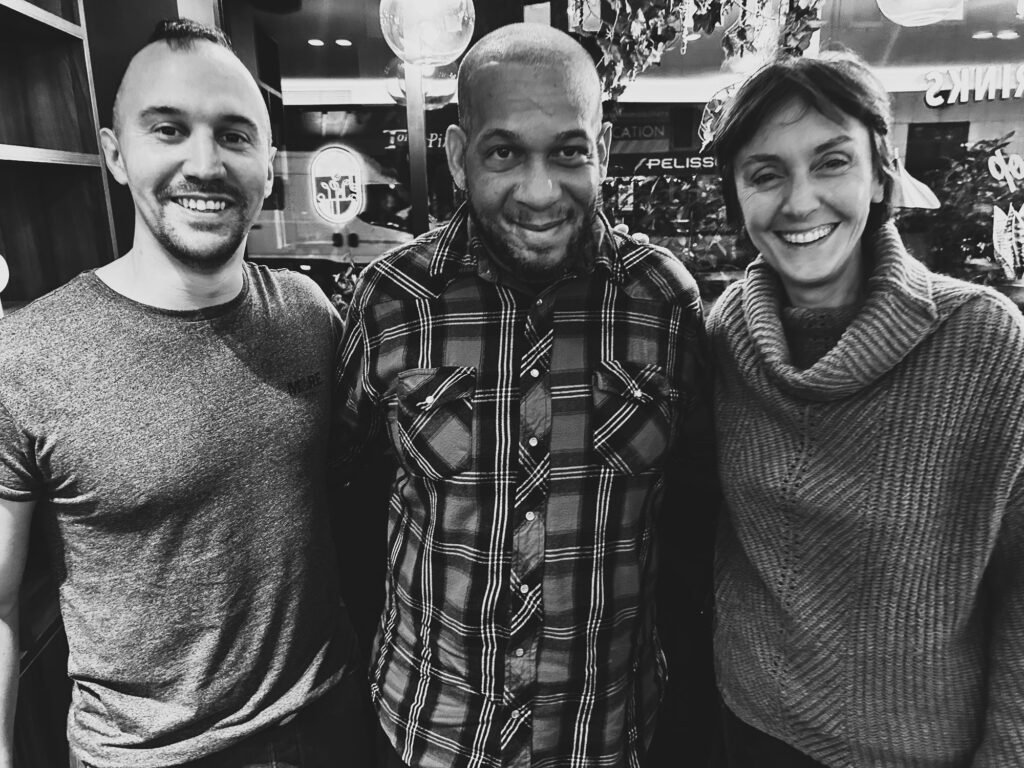
We meet in Paris, between two trips, with Jérémie Sonnelier. We discuss, we refine, and above all, I discover a reality that I knew without truly looking at it: that of the motion capture actor.
We arrive at a plateau, we play, we give, and we leave.
Like in theater, like in cinema—except here, the body is even more involved, even more technical, even more precise. And yet, as soon as it comes to carrying out a personal project, everything becomes more complex. Because you have to recreate everything. The conditions, the tools, the teams, the time.
And at one point, Silvia tells me about a project of hers.
A project she hasn't really had time to bring to life yet.
And there, almost instinctively, I say to him:
Come to the residency.
Not for production.
Not to respond to an order.
But to write.
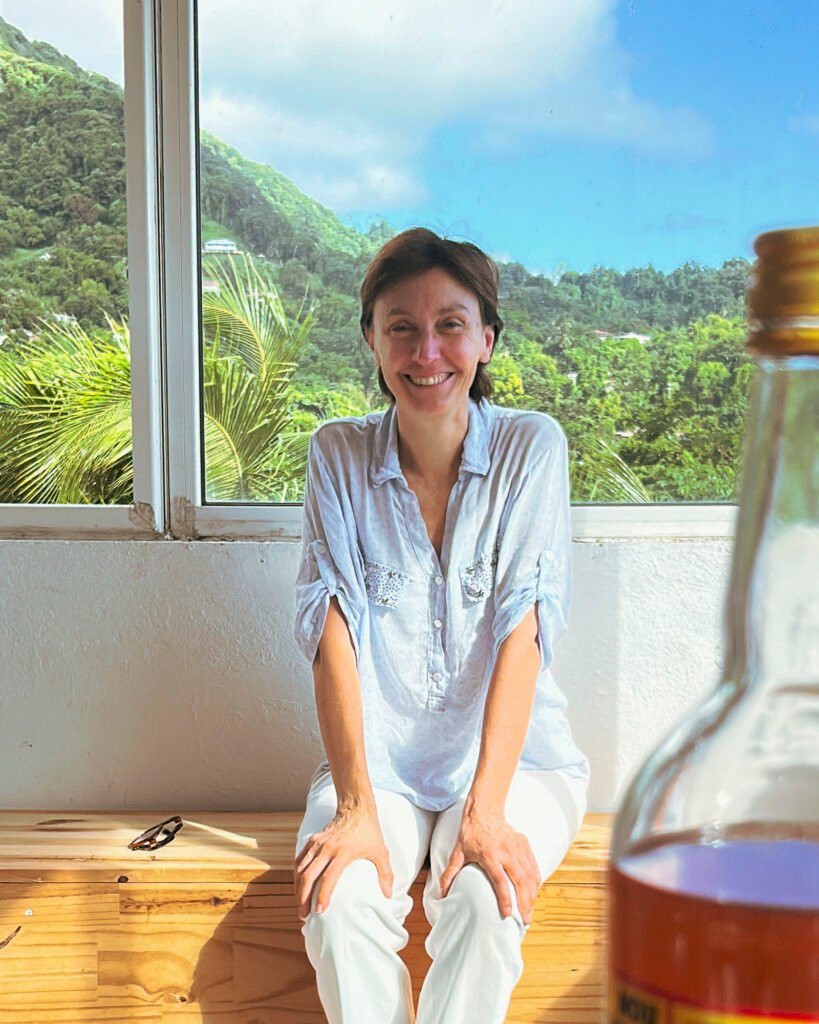
This is how, almost on the spot, this idea is born cinematic writing residency.
A somewhat hybrid term, between video games and cinema, to talk about those moments where the game becomes narration, where movement becomes intention, where we create scenes that are not yet works, but already worlds.
And during this residency, we write.
Not with words alone, but with bodies, images, fragments.
Every day, a scene.
Every day, an attempt.
Between two work periods, we travel through Martinique.
We discover, we exchange, we connect.
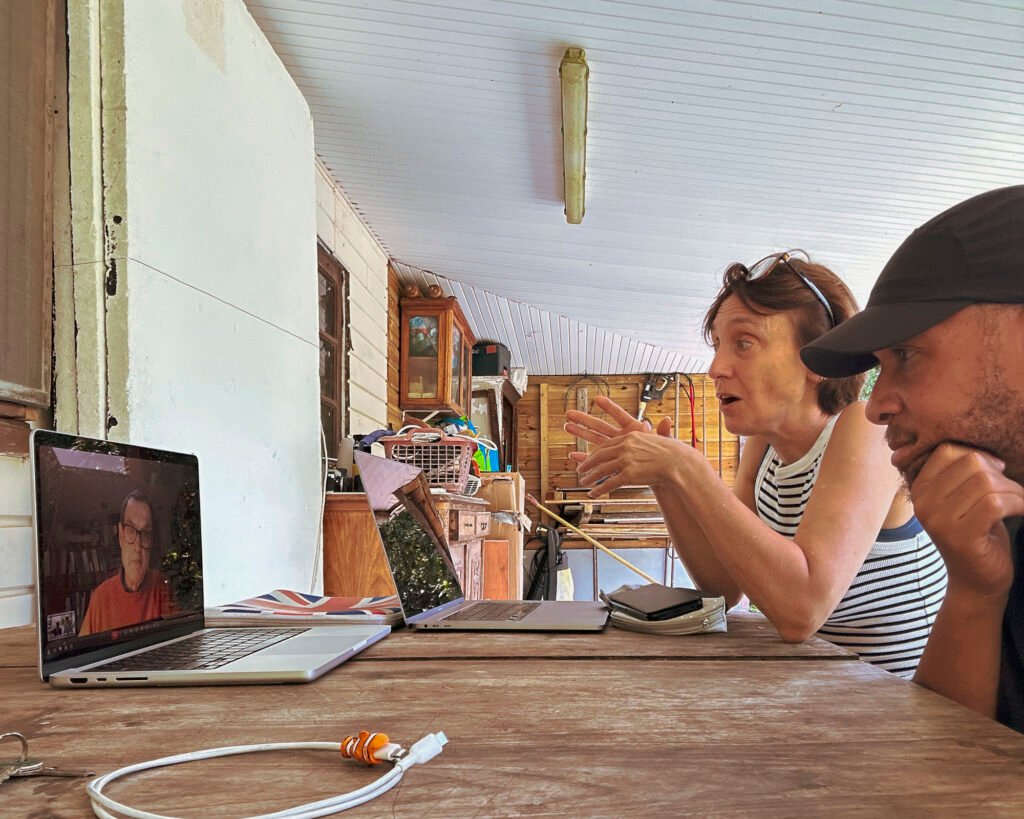
We go through Tropiques Atrium, where the meeting with Corinne Balian opens up another space: that of transmission. Present motion capture not as a distant technology, but as a living, accessible, well-considered practice.
Then there is high school Victor Anicet High School
And then, something happens.
The presentation is transforming.
It's overflowing.
Students recognize, question, get excited.
Very quickly, it no longer resembles a classic intervention.
It almost looks like a mini-Comic Con.
Photos, conversations, bright gazes.
And above all, an awakening.
This audience is already here.
Players, spectators, animation enthusiasts, people deeply connected to contemporary forms of storytelling. And facing them, someone who concretely embodies these worlds.
The connection is immediate.
And for me, that's another discovery.
Another move.
Understand that these practices, sometimes perceived as distant or specialized, are actually already integrated, desired, and expected.
Silvia's residence then confirms something very simple:
This tool, residence, works.
Not just for production.
But to allow.
Allow a personal project to exist.
Allow a territory to connect.
Allowing audiences to recognize themselves in contemporary practices.
And in all of that, there is also a form of trust.
To come work here.
On this territory often called small.
Small in size, perhaps.
But not in its dynamics.
Not in what's at stake.
I hope she comes back.
With Jérémie Sennelier this time.
And that these meetings will continue.
With even more young people, even more exchanges, even more of that energy that circulates when we learn together, without unnecessary hierarchy, with simply the desire to do.